Why Great Architects Design Shading from Day One
Why Great Architects Design Shading from Day One
Across Ireland, and especially in Dublin, Cork, Galway and other areas of large commercial developments, leading architects now start every major project with performance in mind. Intelligent façade design no longer begins after planning. Instead, it forms part of the concept stage because shading directly shapes massing, glazing ratios, and building orientation. When designers model smart shading early, they eliminate glare risks before they ever appear. Smart façades also respond dynamically to sun levels through real-time sensor data, meaning buildings actively adapt rather than remain static. For Smartshade Ireland, this shift defines the modern market.
Designing Buildings That Think: How Smart Blinds Are Becoming Architectural Systems
In Ireland’s commercial and mixed-use developments, buildings now behave like integrated digital ecosystems. Smart blinds connect directly to lighting systems, HVAC, and building management platforms. This integration allows every element to work together instead of competing. As a result, buildings waste less energy and maintain comfort automatically. Architects can now confidently design larger glazed façades without sacrificing performance because smart blinds anticipate discomfort before occupants even notice it.
Glare Is a Design Failure in Ireland – Not an Operational Problem
Glare continues to plague buildings across Ireland because shading often enters the design too late. When blinds get added as an afterthought, users close them permanently, destroying daylight and views. Irish-based design teams now tackle glare through solar path analysis at concept stage. By modelling sun angles and seasonal variation, they ensure winter sun supports warmth while summer sun stays controlled. This proactive design approach removes glare before it ever becomes visible.
From Sketchbook to Sensor: Embedding Smart Blinds at Early Design Stages
At RIBA Stage 1 and Stage 2, Irish architects define orientation, massing, and façade performance. These stages now include shading strategy as standard. When blind zones, motor locations, and wiring routes appear early in drawings, ceilings remain clean and façades remain uncompromised. Smartshade Ireland works with Irish design teams to ensure smart blinds integrate seamlessly rather than appear as late-stage intrusions.
How Intelligent Shading Is Redefining Sustainable Architecture in Ireland
Sustainable architecture across Ireland now depends on dynamic systems, not just passive insulation. Smart blinds prevent solar heat from entering spaces in summer while allowing passive heat gain during winter months. This approach cuts cooling demand, reduces heating loads, and lowers operational carbon across Ireland’s building stock. For developers, this translates directly into improved BER ratings and stronger compliance with national energy targets.
Why Architects Must Design the View and the Control of the View Together
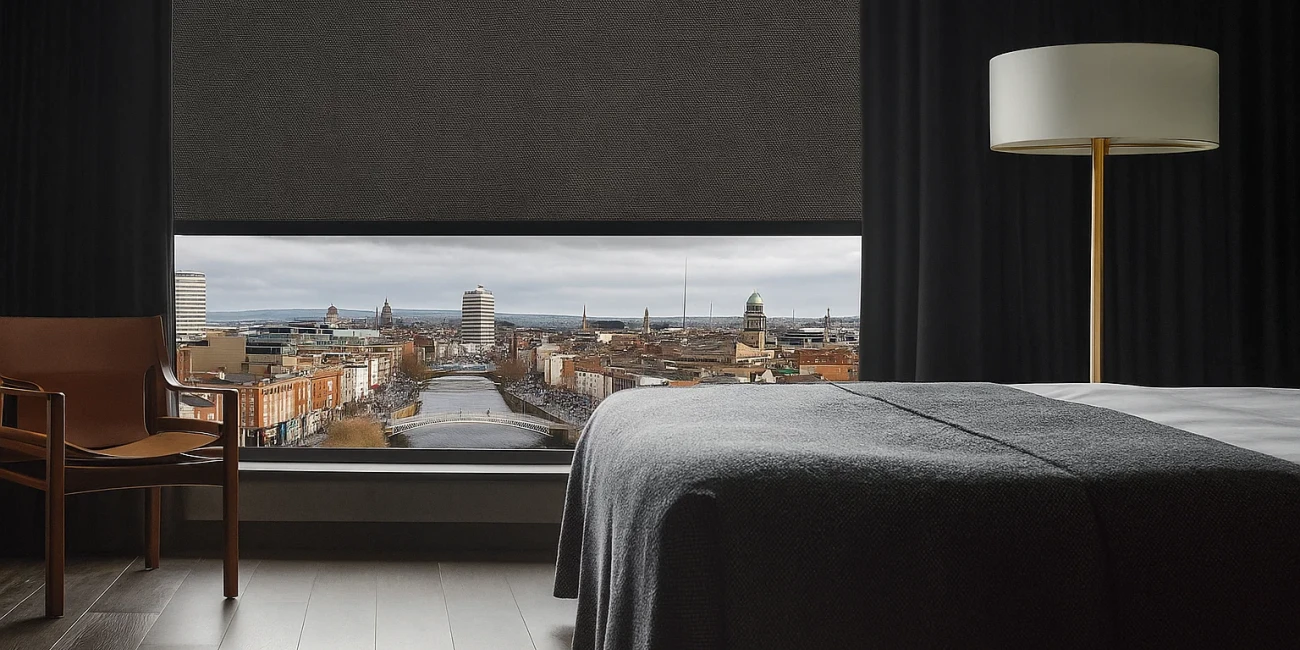
Buildings across Ireland are always designed with the aim to maximise views, but glare and privacy concerns often undermine that ambition. Smart blinds allow occupants to enjoy open glazing while maintaining comfort and privacy when required. Architects who design both the view and its control deliver spaces that people trust rather than fight. Smartshade Ireland ensures fabric openness, automation logic, and control strategies always reflect the original design intent.
Invisible Technology with Visible Results: Concealed Smart Blind Integration
Nothing disrupts high-end Irish architecture faster than visible retrofit shading solutions. Late-stage installations lead to bulky ceiling details and exposed cabling that compromise clean lines. Projects that integrate smart blinds from day one avoid these issues completely. By coordinating recesses, blind pockets, and access points early, designers achieve invisible technology with highly visible performance.
The New Window Brief for Ireland: Glass, Frame, Automation and Behaviour
The modern window brief in Ireland extends far beyond U-values. Architects now specify glass, framing, shading systems, automation logic, and occupant behaviour together. When these elements form one integrated system, conflicts between disciplines disappear and building operators gain clarity. This joined-up approach produces reliable performance throughout a building’s life cycle.
How Early Smart Blind Decisions Prevent Overheating Redesigns
Overheating problems across Ireland rarely stem from poor intent. They result from late shading decisions. When blinds appear after planning, façades require awkward additions that compromise the original vision. Early modelling allows architects to refine glazing size, orientation, and blind strategy before submissions go in. This proactive process prevents costly redesigns and planning delays.
Why Blinds in Ireland Are Now Environmental Control Systems – Not Accessories
Blinds across Ireland no longer belong in the finishes package. They function as environmental control systems that regulate heat, glare, daylight, privacy, and energy usage. Architects who still treat blinds as decorative accessories miss enormous performance opportunities. Those who integrate them early unlock buildings that look better, perform better, and feel better for every occupant.
To complete the journey from concept to performance,The Smartshade Academy, an open-door learning location for architects and interior designers across Ireland. The academy offers hands-on demonstrations, technical workshops, CPD sessions, and real-world project insights that bridge the gap between design intent and operational reality. By welcoming design professionals into its process, Smartshade turns smart shading from a product into a shared design language, empowering teams to specify with confidence, avoid costly mistakes, and deliver buildings that truly think.
To find out more or to schedule a visit to the Smartshade Academy reach out to our team today.